Garden Clearance in Brixton

Garden Clearance Brixton provides a focused service for clearing outdoor spaces in the area, handling the removal of green waste, broken garden items and general outdoor clutter so the space can be put back to practical use. We work with domestic gardens, shared outdoor areas and overgrown plots that need a tidy, ordered clear-out rather than a general clean-up. The service is built around straightforward collection, sensible sorting and careful loading so customers can deal with the work without organising multiple trips to a tip.
Our garden clearance work can include bagged cuttings, branches, hedge trimmings, old plant pots, damaged fencing pieces and other items commonly left after pruning, landscaping or a long period of neglect. Where a garden contains mixed material, we separate what can be recycled or diverted from disposal from what needs removal as waste. Clear access, safe lifting and tidy finishing are part of the process, because outdoor spaces often contain awkward paths, wet ground, narrow side returns and other features that need attention as items are taken away.
For a quote, it helps to describe the size of the outdoor area and the type of material that needs clearing. If you are comparing services, start with the actual waste to be removed rather than just the number of items, because light plant waste and heavy soil-filled pots need different handling. You can also tell us whether the job is a one-off tidy or part of a larger garden project so the removal plan matches the work involved. Ask for a quotation when you are ready.
What our garden clearance service covers
The service is aimed at the practical jobs that usually build up outdoors: cuttings after seasonal pruning, piles of leaves, lifted turf, old compost sacks, broken ornaments and general clutter that has no remaining use in the garden. We also clear unwanted outdoor storage items such as plant trays, cracked watering cans, damaged planters and miscellaneous items left behind after a move or garden redesign. The aim is to leave the space clear enough for maintenance, replanting or simple everyday use.
In many gardens, the waste is mixed rather than neatly separated, so a useful clearance service needs to cope with both organic and non-organic material in a controlled way. Branches and thicker woody material may need bundling or loading separately from lighter green waste, while heavy objects require careful handling to avoid damage to paving, steps or nearby borders. If a customer already knows which items should stay, it helps to mark those in advance so the cleared area remains orderly.
Green waste and organic material
Green waste clearance usually covers grass cuttings, hedge clippings, dead plants, weeds and other growth removed during routine maintenance. This material can take up more space than expected, especially when damp or compressed in bags, so it is sensible to assess it by volume as well as by weight. In some cases, a small number of overgrown shrubs can generate far more waste than an ordinary tidy-up, which is why a proper description matters when arranging removal.
Removing bulky outdoor items
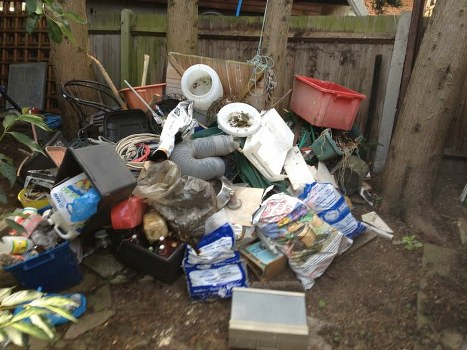
Many garden clearances in Brixton involve more than plant waste. Outdoor furniture, old timber, disused plant stands, children’s play items and worn storage units can all occupy valuable space and need dismantling or manual handling before they can be removed. We deal with items that are suitable for clearance from a private garden or shared courtyard, taking care to keep access routes as clear as possible while the work is underway. The service is useful when a garden has become a storage area as well as a growing space.
Bulky items often create a different kind of challenge from light waste because they are awkward to carry and may contain mixed materials such as metal, fabric, plastic and treated wood. Where dismantling is required, the sequence matters: loose pieces should be separated first, then the larger parts lifted out without scraping walls, doors or paving. For customers, it is often helpful to think about what needs to leave the site and what should remain in place before the clearance begins.
Typical items in this category can include old chairs, tables, benches, broken sheds or shed parts, rusted frames, unused shelves, damaged paving accessories and redundant gardening equipment. A simple way to prepare is to group the items by type and keep anything fragile or valuable away from the clearance area. That makes the process more efficient and reduces the risk of accidental removal. If you want to keep the job moving smoothly, send a clear description and request a quotation.
Overgrown gardens and neglected plots
Some outdoor spaces need a clearance because they have become too overgrown for ordinary maintenance. In those cases, the work may involve collecting large quantities of cut vegetation, removing fallen branches and clearing accumulated debris that has collected under dense growth. The result is not a landscaping makeover, but a workable starting point for the next stage of care. That can matter when the area has pathways, borders or structures hidden beneath layers of growth.
An overgrown garden often contains a mixture of soft and hard material, and the volume can be difficult to judge from the outside. The useful approach is to identify the main obstacles first: blocked access, hidden bags or containers, unstable stacked items and areas where the growth has trapped waste. This type of clearance is best planned around safe movement through the site, especially where steps, narrow passages or uneven ground are involved. We can remove the waste once the route and scope are clear.
- heavy pruning waste and branch piles
- bags of leaves, weeds and grass cuttings
- fallen material trapped around borders or fences
- discarded outdoor items mixed into the vegetation
- general debris from a long-neglected garden
Garden waste, recycling and disposal choices
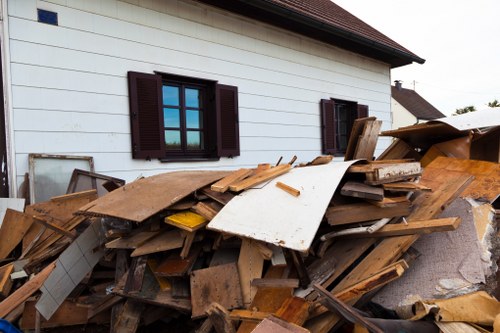
Not every clearance job should be treated the same way. Green waste, untreated wood, reusable metal, broken plastics and soil-heavy material may need different handling, and the disposal route can vary depending on what has been collected. When a garden clearance contains a mix of material, a thoughtful sort at the point of loading helps make the process more orderly and can reduce avoidable disposal of items that could have been separated more effectively. That is especially relevant for larger clear-outs.
Customers sometimes know only that the garden needs “everything goneâ€, but a better quote comes from separating waste into broad groups such as plant matter, bulky outdoor items, timber, soil, and general rubbish. That distinction is practical, not academic, because weight, shape and material type all affect how items are moved and processed. Where a customer wants to retain particular items for reuse, it is sensible to set them aside before the clearance begins so the load list stays accurate.
If you are arranging work for a property with mixed outdoor clutter, a short inventory helps us understand what will be collected and what access is available. Photographs can be useful too, particularly when they show gateways, side returns or difficult corners rather than only the most obvious pile. Keep the details simple: what is there, roughly how much there is, and whether any items are awkward, heavy or fixed in place. Then ask for a quotation.
Planning a clearance around access and timing
Garden clearances are often smoother when the customer considers access before the work starts. A narrow side gate, a shared passage, low branches or uneven paving can all affect how items are carried out, and the easiest route may not be the most obvious one. It also helps to mention whether the clearance needs to happen before another trade visits, before a delivery, or as part of a larger tidy-up. A clear schedule avoids unnecessary overlap.
For many jobs, the most useful information is practical rather than decorative: where waste is located, how much space it occupies, and whether anything is fragile or fixed nearby. If the garden has several areas, point out which parts should be cleared first so the work follows a sensible sequence. This is especially useful when there are multiple storage points or when access to the rear of the property is limited. Good planning makes the collection safer and tidier.
Useful details to include in your enquiry
When requesting a quotation, you can include the main waste types, approximate quantity, whether the items are bagged or loose, and any access issues that matter. If the garden contains both clearance waste and items you want left behind, a short note can prevent confusion. For larger or more complicated spaces, a few photographs are often enough to show the scale without needing a long explanation. Keep the enquiry focused and you will get a clearer response.
How we approach tidy finishing
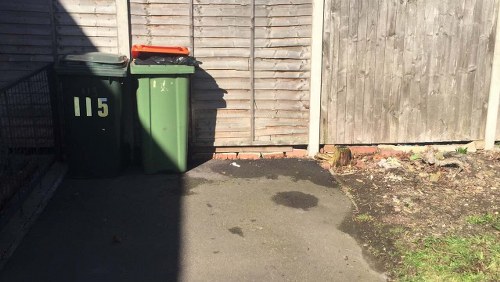
A good garden clearance should leave the space ready for its next use rather than simply emptied at speed. That means removing loose fragments, checking for small offcuts that may have fallen during loading and making sure any access points used during the job are left in an orderly state. The exact finish depends on the site and the material removed, but the aim is always to keep the result neat and practical. Where possible, we work methodically so the garden is not left looking half-finished.
Different gardens call for different levels of handling. A compact courtyard may need careful lifting through a tight route, while a larger back garden may require more time spent sorting material into sensible groups. In either case, the priority is to move waste without creating avoidable mess or damage. Care with edges, paths and planted areas matters because the work often happens in spaces where soil, gravel and paving sit close together and can be disturbed easily.
If your garden is part of a property with neighbours close by, it can be useful to mention shared access, parking constraints or gate widths when asking for a quotation. That does not mean the job is complicated; it simply helps the clearance plan match the site correctly. A concise description, a few images and a list of what should be removed are usually enough to get started. Ask for a quotation when you are ready to clear the space.
About Brixton
Brixton is a district in the London Borough of Lambeth, in south London, and it is known for a dense urban character shaped by transport, housing and long-running commercial activity. Brixton Road forms one of its major routes, while Brixton Underground station and the nearby rail station have long supported movement into and out of the area. The neighbourhood’s built environment includes Victorian and Edwardian terraces, post-war housing and a busy mix of market streets, smaller shopping parades and civic buildings. Brixton Market and Brixton Village are central to local life, with covered arcades and food-led units that reflect the area’s changing commercial identity. The Ritzy cinema on Coldharbour Lane is one of the best-known cultural landmarks, and the restored Brixton Windmill in nearby Windmill Gardens links the district to earlier rural history. Brockwell Park lies close by and remains one of the principal green spaces used by residents across the wider locality, with open views, mature trees and recreation areas. The area’s story is also closely connected to migration and music, with reggae, sound system culture and later electronic and dance scenes helping define Brixton’s reputation. It is a place of strong contrasts: busy main roads, compact side streets, active night-time venues and quieter residential terraces all sit within a relatively small urban footprint. That mixture gives Brixton a recognisable local character without making it feel uniform, and many of its streets still show the layers of development that have taken place over more than a century.
Why customers arrange garden clearance
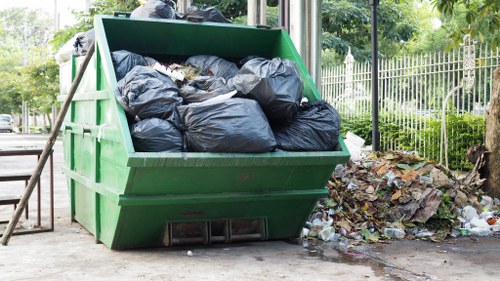
People usually arrange a garden clearance when a space has reached a point where ordinary maintenance no longer solves the problem. That might be after a long period without attention, following pruning or reshaping work, or after outdoor items have accumulated around the edges of the garden. The service is also useful after weather damage, boundary work or a move, when the outdoor space needs to be brought back under control so it can be used again in a sensible way. The goal is straightforward and practical.
There is rarely one single type of job. Some customers need a small collection of bags and branches, while others need a more substantial removal that includes bulky items, mixed waste and overgrown material. The common factor is that the outdoor area contains items that no longer belong there or are too much for one household to move safely without help. A clear description of the waste type is therefore more useful than a vague estimate of “a lotâ€, because it lets the removal plan match the actual work.
For a simple next step, gather what you want removed, note any access constraints and send the details for pricing. If you are comparing options, focus on how each service handles the material you actually have rather than on generic promises. You can contact us with your clearance details, or simply ask for a quotation when you are ready to move ahead.
Related clearance options
Garden clearance is often one part of a wider property tidy-up, and some customers also need help with outdoor sheds, garages, household items or heavier waste that has built up over time. Where those jobs are relevant, it is sensible to choose the service that matches the material rather than forcing everything into one category. This keeps the clearance more accurate and can make the scope easier to explain when you request a price.
For spaces that include mixed domestic material as well as outdoor waste, a broader removal plan may be useful. A property may need one approach for garden debris, another for old furniture, and another for items stored indoors or in loft spaces. We keep the work focused on the described task, and that makes it easier to separate what is to be cleared from what stays in place. If the job extends beyond the garden, note that in your enquiry so the right type of removal is arranged.
Useful pages for further detail include garden clearance, waste removal, garage clearance, home clearance, furniture clearance, house clearance, loft clearance, builders waste clearance, pricing and quotes and contact us. If you want to talk through a specific clearance, start with the service that best fits the waste type and then request a quotation using the contact page.